
A Natural Disaster Preparedness Guide
Download your document here.

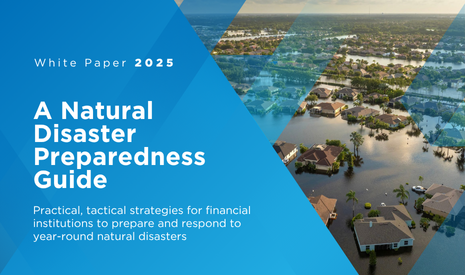
Is Your Institution Ready for the Next Natural Disaster?
Download the 2025 White Paper: A Natural Disaster Preparedness Guide
Natural disasters are no longer rare events—they're a growing financial threat. From hurricanes and wildfires to floods and winter storms, billion-dollar losses are becoming more common, leaving financial institutions exposed to rising default rates, collateral damage, and disrupted operations.
This guide offers:
✅ Practical, tactical strategies to prepare for and respond to natural disasters
✅ Insights into year-round risk management and borrower communication
✅ Business continuity tips to protect your portfolio and preserve relationships
Whether your institution is coastal, inland, urban, or rural—preparedness is your best defense.
Don’t wait for a disaster to strike.
FAQs
You will learn how natural disasters can affect financial institution operations, loan portfolios, collateral, claims, delinquencies and borrower relationships. The white paper explains disaster risks across regions, six preparation strategies, program-building steps, staff-readiness questions and ways to help accountholders recover. It also covers omnichannel communication, insurance tracking, geolocation, off-site claims management, AI and collection technology.
This white paper is designed for credit union, bank and lending leaders responsible for business continuity, risk management, lending, servicing, collections, insurance, claims, operations or accountholder communication. It can help teams build or refine a natural disaster preparedness program that protects employees, maintains essential services, manages portfolio exposure and supports borrowers before, during and after a disaster.
Natural disaster preparedness is important because no financial institution is fully insulated from hurricanes, flooding, wildfires, winter storms or other events. Disasters can interrupt operations, damage collateral, increase claims and contribute to borrower delinquencies and defaults. A documented response program helps credit unions and banks maintain services, manage losses and communicate clearly during a crisis.
Yes. The white paper provides six preparation strategies: use omnichannel communication, maintain portfolio coverage, geolocate vehicles, establish off-site claims processes, apply AI capabilities and plan for delinquency. It also includes tactical steps for creating a planning committee, protecting data, defining authority, identifying vulnerabilities, establishing safety procedures, training employees and testing the program.
The white paper addresses operational disruption, collateral damage, insurance lapses, increased claim volume, rising delinquencies and defaults, borrower communication gaps, staff safety and disaster-related fraud. It also helps financial institutions prepare for data-access problems, power or internet outages, branch closures, supplier interruptions and other vulnerabilities that can prevent them from serving accountholders during an emergency.